
The quiet during the drive back from the hospital cuts both ways. Not loud like all those beeping devices anymore, yet packed with things nobody’s saying. When you turn into the driveway at your mom’s place in Plymouth, your eyes land on the rearview – and there’s that look, heavy with stress, staring right back.
Being the main person in charge now brings a real edge; the dread of overlooking a sign, of rushing once more to ER, hangs close.
This shift is risky – yet hospital comebacks happen way too often. Still, they don’t have to happen at all. Picture pro nursing care at home like crafting a firm path from the hospital straight into steady, self-reliant living. Here’s what holds that path together.
Pillar 1: Proactive Monitoring: How Skilled Nursing Care in Plymouth Acts as Your Eyes and Ears
Back at home, someone’s health might shift fast; even small changes like uneven breaths or a bit more swelling could hint at trouble starting. A mild fever might not seem like much – but together, these signs can add up. When you’re caring for a loved one daily, telling what’s harmless from what’s risky feels overwhelming; every little thing might mean nothing or could mean everything.
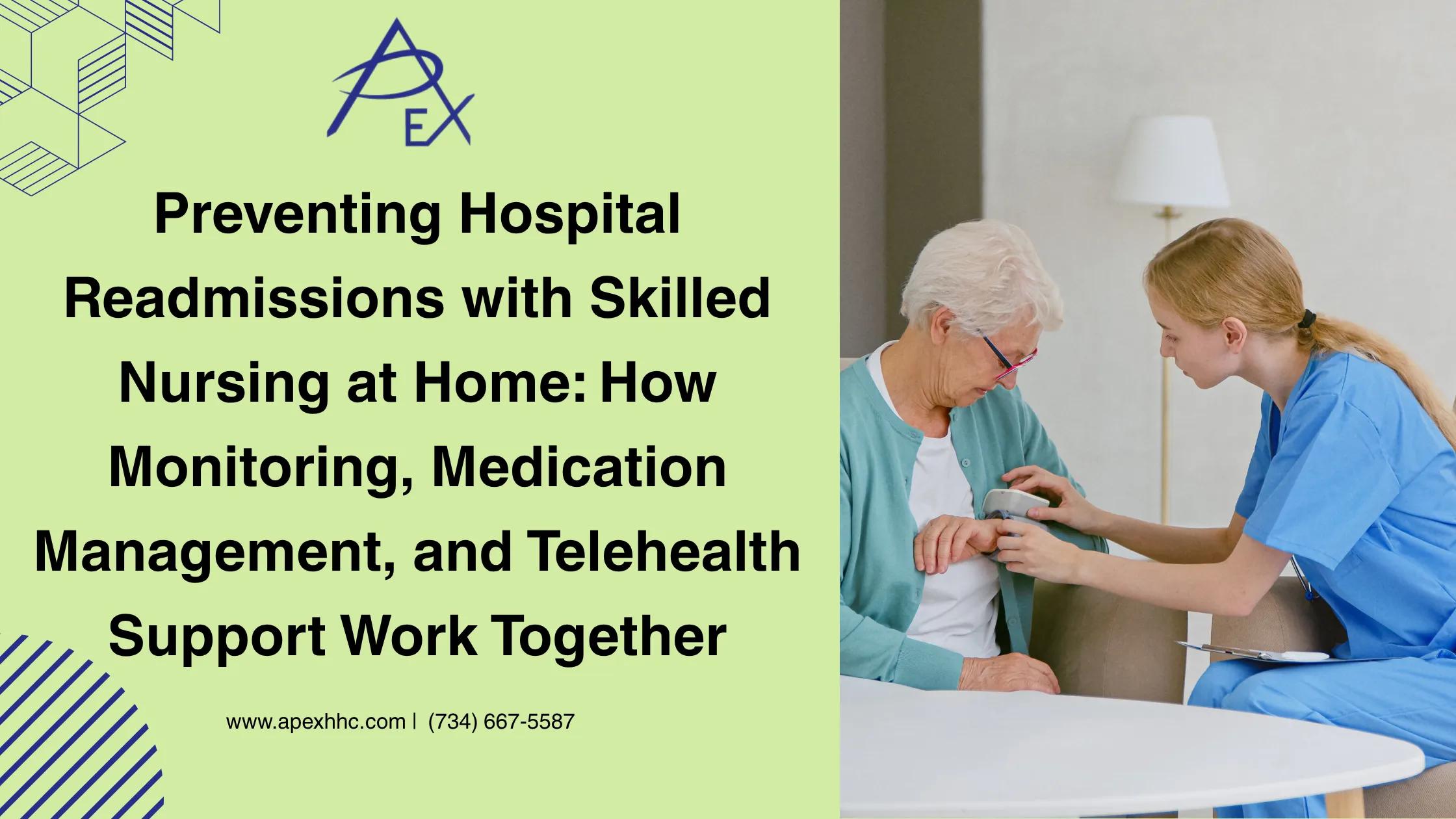
This is when home health nursing really shines – through the know-how of a certified nurse who acts like a medical investigator, spotting hints while connecting dots before issues get worse. These pros visit homes regularly and usually do things such as:
- Clinical Assessments: They’ll tune into heart and lung sounds, look for puffiness, go over how well wounds are mending, and also keep an eye out for red flags like infection or other issues popping up.
- Vital Sign Trending: When blood pressure, heart rate, or oxygen levels are checked often, warning signs show up early – way before things get serious.
- Empowering Education: The nurse shows you and your family which signs to notice, explains what they suggest, or tells you when to reach out – turning worry into clear understanding.
This kind of ahead-of-time monitoring might turn a quick fix at home into avoiding an anxious rush to the ER.
Pillar 2: Meticulous Medication Management
Medication mix-ups play a big part in why people end up back in the hospital. After leaving care, folks usually go home loaded with a bunch of new meds – plus changes in how much they take – making things hard to follow. That setup? Almost guarantees someone will slip up sooner or later.
Expert nursing care helps sort out the mess. When families look up “Skilled Nursing Care Near Me,” close attention to meds usually makes the biggest difference in staying safe while healing. A nurse will:
- Go over every medication: They check hospital discharge instructions carefully, then match them against earlier prescriptions – spotting risky mix-ups along the way.
- Pick an easy setup: try using a daily pill box along with a timetable that’s quick to follow.
- Provide Education: They make sure the patient and relatives know what each pill does, how much to take, also what side effects might show up.
This part of the bridge makes sure the doctor’s recovery steps are stuck to closely, using a key backup plan to avoid problems with meds.
Pillar 3: Telehealth Support, the Communication Link
Today’s tech adds backup by filling gaps when nurses can’t be there face-to-face. Telehealth at home isn’t meant to swap real human contact – it’s built to boost it.
This might be just a safe video chat to run something by someone quickly – or it could be a setup where daily weight or blood pressure numbers go straight to the nurse without any extra steps. That steady, quiet link? It brings serious reassurance, so the care crew seems close by and reachable, even when they’re not actually in the house.
The Full Team: A Holistic Approach to a Stronger Recovery
Real healing works on mind and body together. Our trained nurse could be handling wound care after surgery, yet figuring out how to stand up without falling? That’s when a Physical Therapy expert jumps in, slowly bringing back muscle power and self-assurance. Next up, Occupational Therapy in Plymouth tweaks everyday tasks, adjusting the house to prevent mishaps. When speech gets scrambled due to stroke, our Speech Therapy support becomes essential.
This clinical team is supported by our compassionate Home Health Aides and Certified Nursing Assistants, who provide the daily hands-on help that makes all the difference, while our Social Workers help navigate the entire process.
What This Proactive Approach Means for Your Family
- Fewer crisis moments: no more scrambling every time something blows up – you’ll get a pro spotting little glitches early, stopping them from turning into major headaches.
- More confidence: Get clear insights from nurses, so you grasp the reasons behind your tasks and how they fit into care – not just what to do, but why it matters.
- Empowering Education: Peace of mind comes when you know a trained expert checks in on your family member now and then – so you’re free to quit playing nurse around the clock, instead just being their kid once more.
Quick answers
Q: How soon can Skilled Nursing Care Near Me start after discharge?
A: Aim for within 24 to 48 hours. Fast starts reduce confusion and catch early symptoms.
Q: Does Medicare cover Skilled Nursing Care in Plymouth after a hospital stay?
A: Coverage depends on medical need and orders. Ask your discharge planner and your nurse to confirm criteria.
Q: When do Speech Therapy Services in Plymouth help prevent readmissions?
A: Right away if swallowing changed or if coughing during meals appears. Early focus reduces aspiration risk.
Q: Do Social Workers help set up rides and home equipment in Wayne County?
A: Yes. Social Workers connect you to transport, pharmacy delivery, DME vendors, and caregiver support groups.
Q: Are Home Health Aides and Certified Nursing Assistants the same?
A: Roles overlap. Home Health Aides support daily routines. Certified Nursing Assistants bring clinical task training and work under nurse direction.
From Fearful to Confident: Your Path Forward
Heading back from the hospital ought to wrap up healing, not just pause it. When you set up reliable nursing help at your place, you’re picking a route focused on staying ahead of problems instead.
These ways to avoid hospital readmissions matter for families across Wayne County – not only those in Plymouth – anyone needing skilled nursing support. When you’re stepping into this new phase and wondering how to make things smoother for a family member, please contact us. Let’s talk about how we can help. We can go over what’s possible together.