
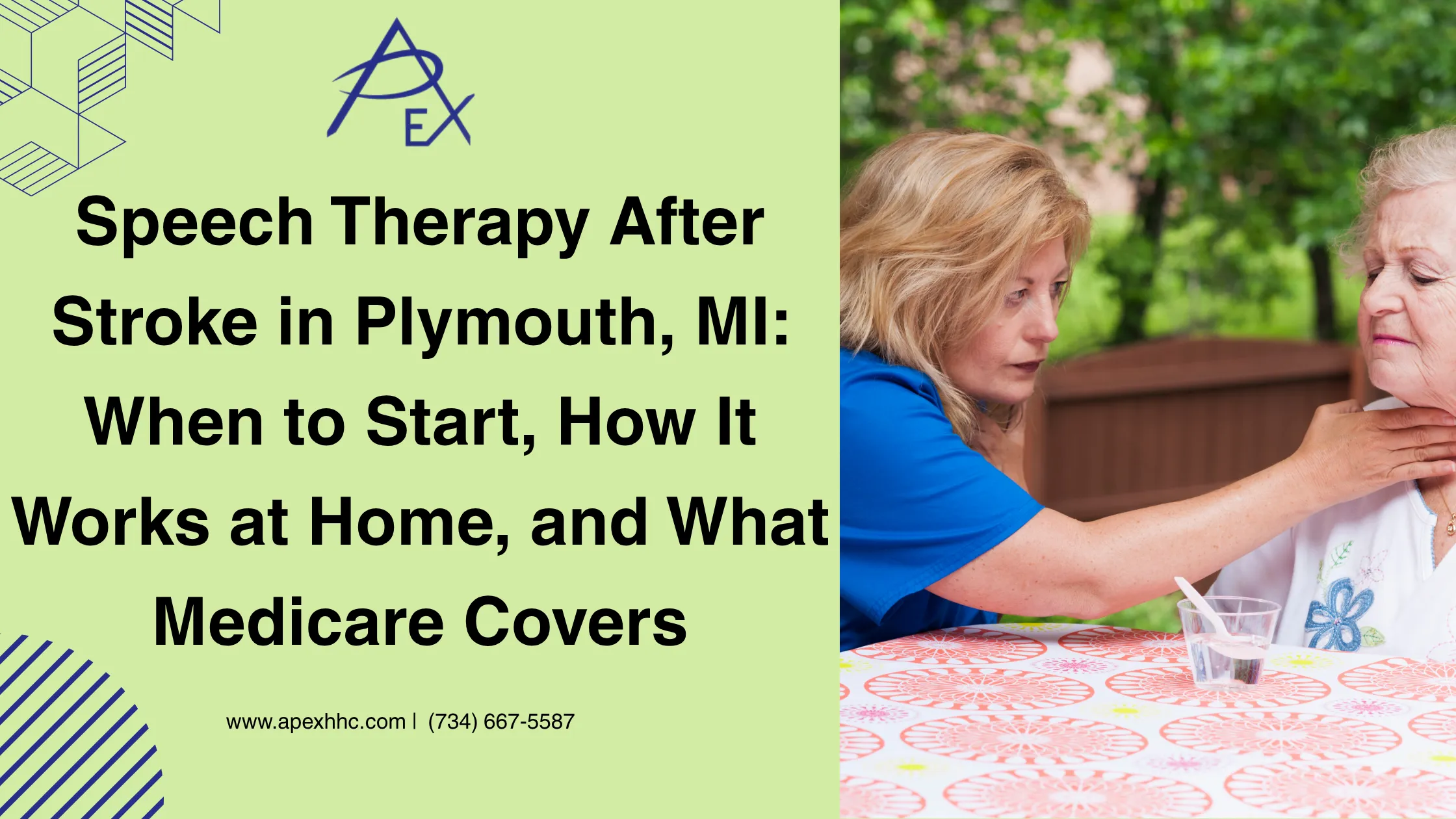
Stroke recovery often affects more than physical movement. Many individuals experience difficulty speaking, understanding language, or swallowing safely after a stroke. Speech therapy becomes a critical part of recovery because it helps rebuild communication skills and supports safe swallowing.
For families in Plymouth, Michigan, home based speech therapy services allow stroke survivors to continue rehabilitation in a familiar environment while receiving professional support from licensed therapists.
How Stroke Can Affect Speech, Communication, and Swallowing
A stroke can impact the areas of the brain responsible for speech, language comprehension, and muscle coordination used for swallowing. These changes can affect daily communication and the ability to eat safely. Understanding these effects helps families recognize why speech therapy is often recommended soon after a stroke.
- Speech Production Changes: Stroke may weaken muscles used for speaking, making words difficult to pronounce clearly.
- Language Comprehension Challenges: Some individuals struggle to understand spoken or written language due to neurological changes.
- Swallowing Difficulties: Stroke can interfere with muscles used for swallowing, increasing the risk of choking or aspiration.
- Communication Confidence Loss: Difficulty speaking can lead to frustration or withdrawal from social interaction.
Families seeking professional help can learn more about speech therapy services available through Apex Home Healthcare in Plymouth.
When Speech Therapy Should Start After a Stroke
Early rehabilitation often plays an important role in stroke recovery. Speech therapy typically begins soon after a patient becomes medically stable. Beginning therapy early allows the brain to begin rebuilding communication pathways.
- Hospital Rehabilitation Stage: Speech therapy may begin while the patient is still in the hospital after the stroke.
- Home Health Therapy Transition: After discharge, therapists can continue treatment through home health care services.
- Ongoing Recovery Support: Many stroke survivors continue therapy for several months as communication improves.
- Individual Recovery Timeline: The duration of therapy varies depending on the severity of the stroke.
Early intervention can significantly improve speech and communication outcomes.
How Speech Therapy Works in a Home Health Setting
Home health speech therapy allows patients to receive rehabilitation in their own environment while working with licensed therapists. This setting provides comfort and allows therapists to design exercises based on everyday communication needs.
- Personalized Therapy Plans: Speech therapists evaluate the patient’s condition and develop customized exercises.
- Communication Skill Practice: Patients practice speaking, listening, reading, and comprehension skills during therapy sessions.
- Swallowing Therapy Exercises: Therapists guide patients through exercises designed to strengthen swallowing muscles.
- Family Involvement: Caregivers and family members often learn communication techniques that support recovery.
Home based care allows therapy to be tailored to the patient’s daily environment.
The Role of Multidisciplinary Care in Stroke Recovery
Speech therapy is often one part of a broader rehabilitation program. Many stroke survivors benefit from additional therapy services that support overall recovery. Coordinated care helps address multiple aspects of stroke recovery.
- Physical Therapy Support: Patients may receive physical therapy to improve mobility and strength.
- Occupational Therapy Assistance: Occupational therapy helps individuals regain independence with daily activities.
- Skilled Nursing Monitoring: Skilled nursing care may help manage medications and medical needs during recovery.
- Home Health Aide Support: Home health aide services provide assistance with personal care tasks.
This coordinated approach helps stroke survivors recover more effectively.
What Medicare Covers for Speech Therapy After Stroke
Many families wonder whether speech therapy services are covered by Medicare. In many cases, Medicare does provide coverage for medically necessary rehabilitation services. Understanding these coverage guidelines helps families plan for care.
- Home Health Eligibility: Medicare may cover speech therapy if a doctor determines the patient needs skilled therapy services.
- Medical Necessity Requirement: Therapy must be required for treating a condition such as stroke related speech impairment.
- Physician Referral: A doctor typically must order home health therapy services.
- Continued Progress Evaluation: Therapists regularly evaluate patient progress to ensure therapy remains beneficial.
Patients and families should discuss eligibility with their healthcare provider.
Signs That Stroke Survivors May Need Speech Therapy
Some stroke related symptoms may indicate that speech therapy is necessary for recovery. Recognizing these signs early can help families seek professional care sooner.
- Difficulty Speaking Clearly: Slurred speech or difficulty forming words may indicate neurological changes.
- Trouble Understanding Language: Some patients struggle to follow conversations or instructions.
- Swallowing Problems: Difficulty swallowing food or liquids may require therapy intervention.
- Communication Frustration: Patients may withdraw from conversations due to communication challenges.
These signs often improve with professional speech therapy support.
Speech Therapy Services Available in Plymouth, MI
Families across Plymouth and Wayne County often look for local home health providers that offer rehabilitation services after stroke. Apex Home Healthcare provides professional therapy services designed to support stroke recovery at home.
Patients can explore speech therapy services through Apex Home Healthcare which focus on communication improvement and safe swallowing therapy.Residents can also review service areas to confirm availability of home health services throughout Southeast Michigan.
Educational resources about home healthcare services can also be found through the Apex Home Healthcare blog.
Frequently Asked Questions About Speech Therapy After Stroke
Families exploring stroke recovery services often have questions about speech therapy and how it supports rehabilitation. The answers below address common concerns.
When should speech therapy begin after a stroke?
Speech therapy usually begins as soon as the patient becomes medically stable. Early therapy helps rebuild communication pathways and can improve long term recovery outcomes.
Patients can learn more about speech therapy services available through Apex Home Healthcare in Plymouth.
Can speech therapy help with swallowing problems?
Yes. Speech therapists are trained to treat swallowing disorders that may occur after stroke. Therapy exercises strengthen muscles used for swallowing and reduce the risk of choking.
Patients receiving skilled nursing care may also receive coordinated therapy support.
Does Medicare cover speech therapy at home?
Medicare may cover speech therapy if the service is medically necessary and ordered by a physician. Coverage typically falls under home health benefits when patients meet eligibility criteria.
Families can discuss therapy coverage options with providers offering home health care services.
How long does speech therapy after stroke usually last?
The length of therapy varies depending on the severity of the stroke and the patient’s progress. Some individuals may require therapy for several weeks while others continue therapy longer.
Programs such as speech therapy offered by Apex Home Healthcare can adjust treatment plans based on individual recovery needs.
Get Speech Therapy Support From Apex Home Healthcare in Plymouth
Recovering communication abilities after a stroke can take time and consistent therapy. Professional speech therapy services help stroke survivors rebuild communication skills and regain confidence.
Apex Home Healthcare provides home based therapy services across Plymouth and Wayne County, helping patients continue stroke recovery in the comfort of their homes.
📍 Address: 40400 Ann Arbor Rd E, Suite 202A, Plymouth, MI 48170
📞 Call: (734) 667-5587
📧 Email: info@apexhhc.comPatients and families interested in rehabilitation services can explore speech therapy programs available through Apex Home Healthcare or reach out through the contact page to discuss home health care options.